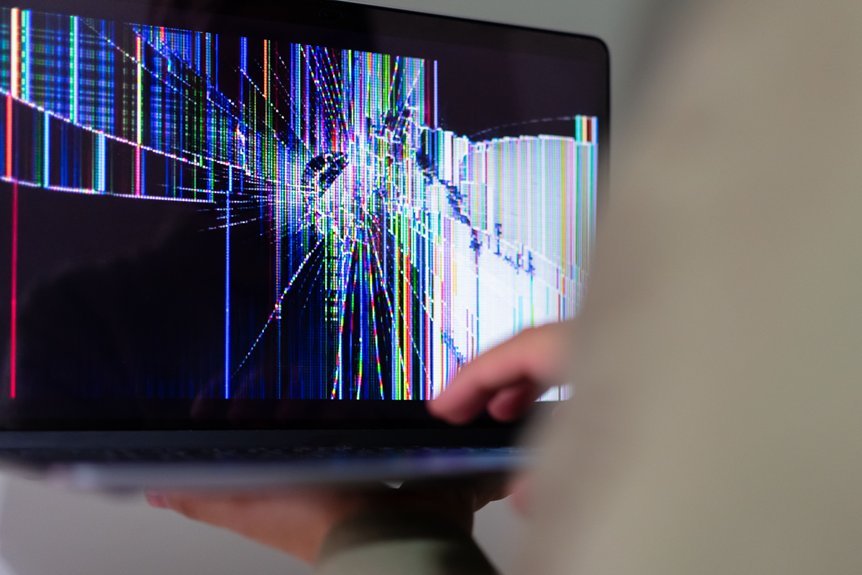
The discussion centers on what the 2126002355 fault signal reveals about core system health and where processing or resource constraints may affect stability. It also covers common electrical and signal faults, including degraded connections, impedance issues, insulation wear, and grounding impedance. Practical steps for quick checks are outlined, from detached evaluation to basic tests and documentation. The guidance aims to prompt informed decisions and timely action, leaving a threshold where further investigation becomes essential.
What the 2126002355 Faults Tell You About Core System Health
The 2126002355 faults offer a concise signal of underlying core system health, highlighting where processing or resource constraints may be impacting stability.
Subtopic misalignment is evident when signals diverge from expected patterns, while Core indicators track baseline performance and anomalies.
This perspective emphasizes external readability, enabling operators to infer resilience, readiness, and potential bottlenecks without conjecture or irrelevant detail.
Common Electrical and Signal Faults for 2126002355 Units
Common electrical and signal faults in 2126002355 units often arise from degraded connections, intermittent contact, or improper impedance matching. Fault indicators appear as sporadic timing shifts and voltage anomalies, while diagnostic patterns reveal recurring symptom clusters across channels. Observers note insulation wear, connector corrosion, and grounding impedance as core contributors, guiding concise evaluation without speculative extrapolation.
Practical Troubleshooting Steps You Can Do Quickly
Practical troubleshooting steps can be performed quickly by focusing on immediate, observable issues and using a structured, rule-of-thumb approach.
The detached evaluation identifies symptoms, checks power and connections, verifies settings, tests with basic tools, and documents results.
A disciplined sequence avoids guesswork, enabling efficient resolution.
Two word idea1, two word idea2, summarize findings, and proceed with informed, autonomous decisions.
When to Replace Parts or Seek Expert Help for 2126002355
Assessing when to replace parts or seek expert help for 2126002355 requires objective thresholds: equipment failure that recurs despite standard troubleshooting, components showing visible damage, overheating, or performance degradation beyond specification limits.
The decision context includes availability of spare parts, maintenance scheduling, system calibration, fault interpretation, and troubleshooting workflow, guiding timely replacement decisions and professional consultation whenever ambiguity persists.
Frequently Asked Questions
What Reliability Indicators Precede 2126002355 Failures?
Reliability indicators precede failures with 2126002355, including rising vibration, abnormal temperatures, and fluctuating electrical signatures. Predictive maintenance analyzes these signals to schedule interventions, reducing downtime. The approach emphasizes proactive monitoring, data trends, and informed decision-making for resilience.
Can Ambient Conditions Trigger Hidden 2126002355 Faults?
Ambient conditions can trigger hidden faults in 2126002355, though rarely; firmware versions influence reliability indicators, revealing issues only under stress. The allegory shows a quiet reactor: subtle signals illuminate hidden faults, guiding attention before failures escalate.
Do Firmware Versions Affect 2126002355 Fault Frequency?
Firmware versions can influence fault frequency, though effects vary by implementation. Reliability indicators suggest minimal impact in stable environments, while ambient conditions modulate observed rates. Overall, firmware versions matter for fault frequency, but context drives magnitude and interpretation.
How Do 2126002355 Faults Impact Safety Features?
The faults can reduce safety feature reliability; fault frequency rises under certain conditions, while environmental triggers may cause intermittent activations. This influences threat detection timing, prompting caution in system responses and emphasizing robust monitoring to maintain user autonomy.
Are Intermittent Faults Resolvable Without Part Replacement?
An allegory begins with a cautious observer, noting that intermittent faults may be resolved through diagnostic strategies and careful maintenance scheduling rather than immediate replacement. They can be addressed, improving reliability without hardware parts, when properly pursued.
Conclusion
In the quiet engine room of a ship, the 2126002355 acts as a lighthouse beacon. When its beacon glimmers, systems align and voyage proceeds; when shadows lengthen, currents drift and danger looms. The faults are weathered signals, not enemies, guiding crew to inspect, test, and adjust. With disciplined checks and timely care, the vessel stays on course. If storms persist, wiser hands consult seasoned technicians; navigation resumes once the beacon steadies.